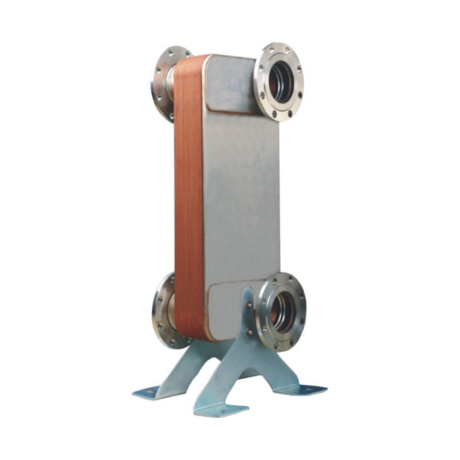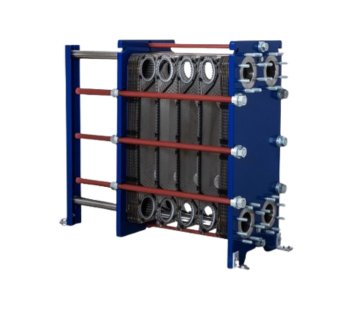


PSHE Introduction
The plate and shell heat exchanger is a heat exchanger that is made of a group of corrugated plates welded by laser (and plasma arc) and placed in a shell, replacing the heat exchange tubes of the original shell and tube heat exchanger, and using the corrugated plate group as the heat transfer element. It is widely used in refrigeration, oil refining, chemical industry, medicine, food, beverage, beer, metallurgy, electricity, environmental protection, oil cooler and other industrial fields.

Design principle
The plate and shell heat exchanger is composed of a corrugated plate group and a shell. It has the advantages of high heat exchange efficiency, small temperature difference at the ends, high temperature and high pressure resistance, good sealing performance, low pressure drop, saving floor space, safety and reliability, and compact structure. It is a new type of heat exchanger that combines the advantages of plate heat exchangers and shell and tube heat exchangers. When the fluid flows through the corrugated plate, it can generate a high degree of turbulence in the countercurrent direction, which greatly improves the heat exchange efficiency. The plate and shell heat exchanger adopts a compact plate structure, small size, easy maintenance, and material saving. Its high heat transfer coefficient makes it cost-effective, which not only guarantees the performance, but also brings more work benefits.

Equipment performance:
Standard temperature design: -80~300℃
Special design temperature: -195~500℃
Standard pressure design: 1, 6, 10, 16, 25, 50bar
Special pressure design: vacuum~70bar
Single plate area: 0.016~2.0㎡
Heat exchange design: condensation, evaporation, liquid-liquid, gas-liquid, gas-gas
Cold and hot temperature difference: minimum 1℃ temperature difference
Fatigue resistance: multiple contact points between plate patterns, shock resistance, stress fatigue resistance
Easy to clean: mechanical cleaning can be performed by disassembling the shell flange

Manufacturing advantages
Compact structure, small size, easier maintenance and service
Unique herringbone corrugated design, with extremely high thermal conductivity
Low volume, small resistance loss, small heat loss
Laser or plasma welding, better sealing
Wide operating pressure, up to 70bar
The heat exchange area can be freely expanded or reduced according to the actual load
High-quality material plates (AISI304/316L), stronger corrosion resistance

Features:
1. High heat transfer
2. Wide pressure range
3. Wide temperature range
4. No gasket
5. Compact
6. Low scaling
7. Low temperature difference
8. Low pressure drop

The temperature stress distribution of the circular plate of the plate and shell heat exchanger is uniform, which can better resist the impact of large temperature differences and start-stop pressure fluctuations and has a longer service life.

Standard configuration:
-Support feet -Connecting pipes
-Flange -Lifting rings
-Grounding wire ears -Finishing processing

Fully welded plate and shell heat exchanger
Strong structure: fully welded structure, high strength, suitable for high pressure and high temperature working conditions.
Good durability: welded structure reduces the risk of leakage, long service life.
No gasket: all-welded structure requires no gasket, reducing the risk of leakage.
High sealing: Suitable for heat transfer of toxic, flammable or valuable media.
High temperature and high pressure: suitable for extreme working conditions, such as high temperature and high pressure environment.
Corrosive media: corrosion-resistant materials can be used, suitable for corrosive media.
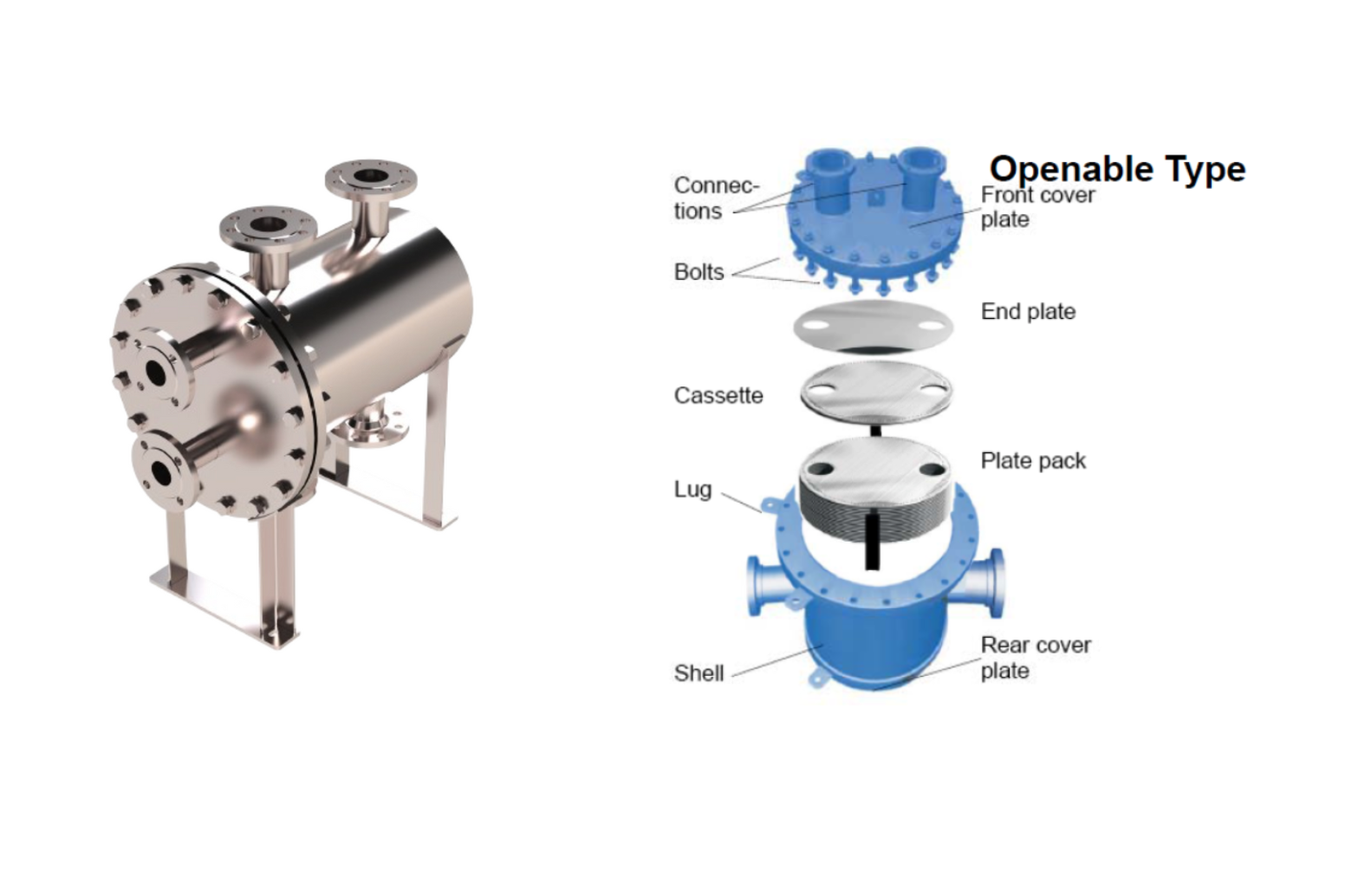
Openable plate and shell heat exchanger
Easy to clean: the plates are removable for easy cleaning and maintenance.
Easy to replace: damaged plates or seals can be replaced individually, reducing maintenance costs.
Expandability: the number of plates can be increased or reduced according to demand, adjusting the heat exchange area.
High adaptability: applicable to a variety of media and working conditions, high flexibility.
Low initial cost: relatively simple structure, low manufacturing cost.
Low maintenance cost: easy to maintain and replace parts, reduce downtime.

Plate and shell heat exchanger inner circle and outer circle welding is the key process in its manufacture, which directly affects the sealing, strength and durability of the equipment.

Gas Hydraulic Testing for Plate Pack
Plate and shell heat exchangers are inspected to ensure quality and reliability in a variety of areas including appearance, dimensions, materials, pressures, leakage, performance, non-destructive testing, cleanliness, vibration, durability and documentation checks.
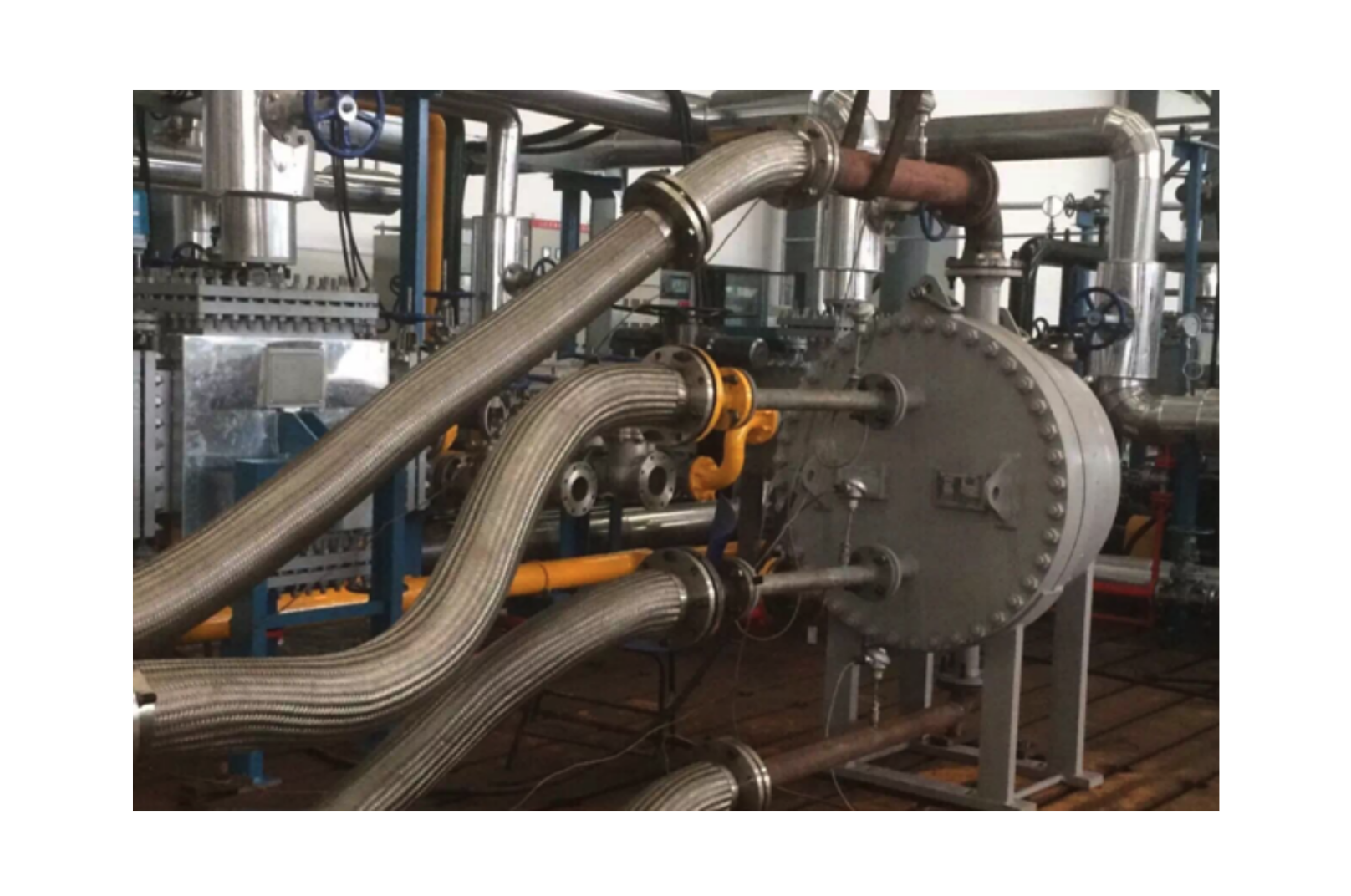
Thermal Performance Testing Platform
Specialized system designed to evaluate the efficiency, heat transfer capabilities, and overall performance of the heat exchanger under various operating conditions.

Plate and shell heat exchangers are widely used in a variety of industries, including petrochemical, power, refrigeration and air conditioning, food and beverage, pharmaceutical, marine and offshore engineering, metallurgy, paper, and district heating and cooling, to meet a wide range of heating, cooling, condensing and heat recovery needs. Their efficient, compact and flexible design makes them key equipment in many industrial processes.