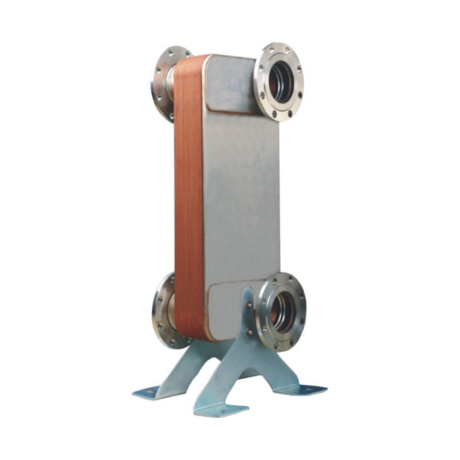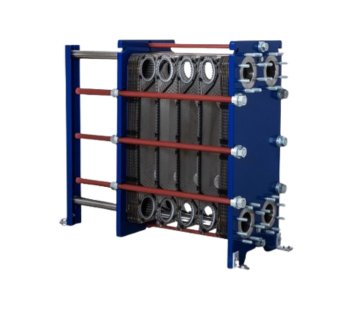



Fully welded plate heat exchanger working principle:
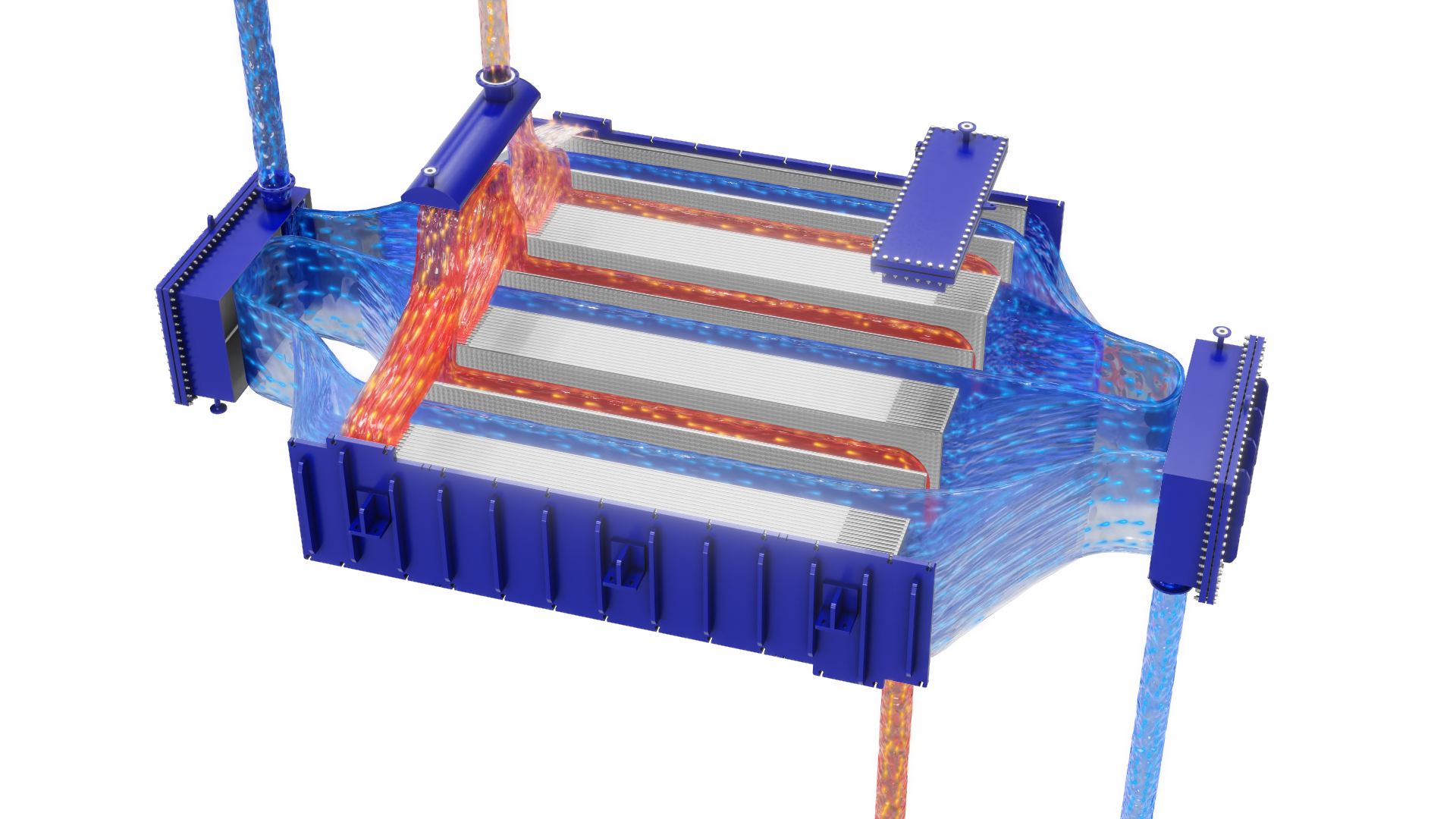
Fully welded heat exchanger belongs to the Lang-wall heat exchanger, heat exchanger of the water form is between two adjacent plates, through the welding of the formation of two circulation channels, two different temperatures of the medium were in the same plate on both sides of the channel flow through each media channel through the staging plate to control the circulation area and the circulation length, so that the high-temperature fluids through the plate will be transferred to the low-temperature fluid heat transfer, so as to achieve the purpose of the heat exchanger.

Composition: plate pair, clamping plate, clamping bolt pair, base and other basic components;
The plate pair is the heat-conducting element of this heat exchanger;
The plate bundle is made of 0.8~1.2mm plates that are pressed and welded together.
Then, the plates and tubes are stacked to form a plate bundle according to the number required by the design, and the transverse welds between the plates and tubes are welded at both ends of the plate bundle. Finally, the plate bundle is welded to the plug and the plug plate.

Flow channel combination:
Design pressure: vacuum ~ 1.0MPa
Plate thickness: 0.8-1.2 mm
Design temperature: ≤150
Flow channel spacing 5 ~ 12 mm
Minimum temperature difference 5℃
Maximum assembly area 1000 m2

Plate Pack Material
SS304 / S5316L / 316Ti / SMO254
Ti / Duplex(2205/2507) / Hastelloy
Plate gaps from 5.0 mm to 12.0 mm
No clogging during operation due to uniform gap widths

The plate is in the form of a concave-convex plate, and a medium flow channel is formed between the plates. The periphery is sealed by welding. One side of the flow channel is a contact surface formed by the nested corrugated plates, and the cleaner medium flows through this channel; the other side of the flow channel is a wide gap channel without a contact surface formed by the nested corrugated plates, and the medium containing solid particles or high viscosity flows through this channel.

The detachable fully welded wide channel structure is convenient for later maintenance and cleaning.
Due to the special design of the plate structure, under the same working conditions, the heat exchange efficiency and pressure loss are better than other forms of heat exchange equipment. The wide gap flow channel fluid flows smoothly without stagnation and dead zone, which can effectively prevent flow channel blockage and slow down the occurrence of wear.

Suitable media
solids/particles
Fibers
Highly viscous products
As a manufacturer of fully welded plate heat exchanger, Worm has a unique advantage in the design and selection of fully welded plate heat exchanger, price, if you need to purchase brazed plate heat exchanger, feel free to contact us!
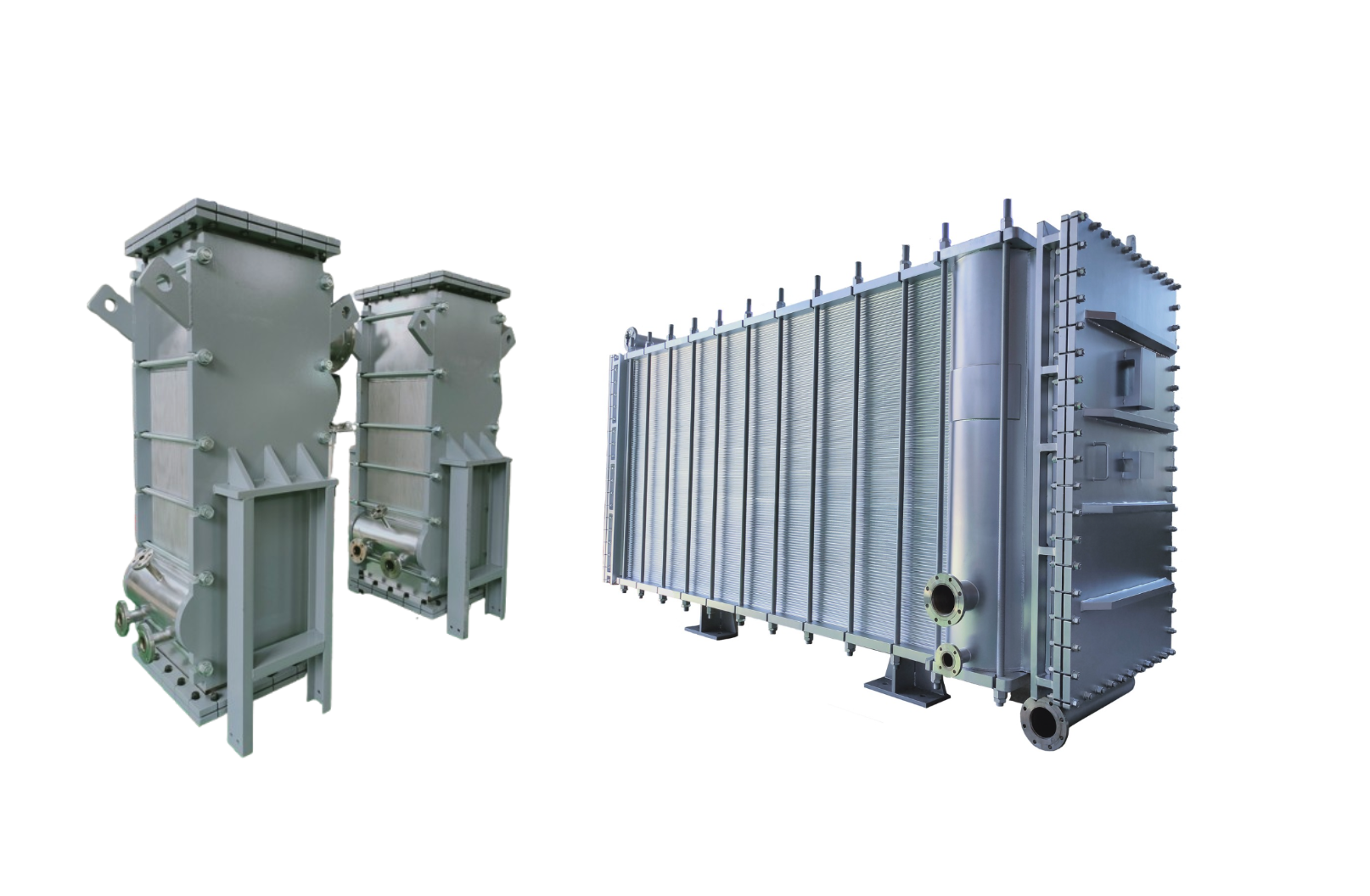
Removable all-welded wide-channel construction for easy post-maintenance cleaning
Due to the special design of the plate structure, the heat transfer efficiency and pressure loss is better than other forms of heat exchange equipment under the same working conditions, wide gap flow channel fluid flow smoothly, no stagnation, no dead zone, which can effectively prevent blockage of the flow channel to slow down the occurrence of abrasion phenomenon.